You are not “done.” You are early in a fight you can win.
If you are reading this because your agency just mentioned a drug test, ordered a fitness-for-duty evaluation, accused you of being “impaired,” or threatened discipline because of a prescription medication, you are in the most dangerous part of the timeline: the moment before the government locks in its narrative.
Here is the truth federal employees need to hear, in plain English: these cases are rarely as simple as the agency pretends. Agencies routinely overreach, skip required steps, mislabel medical issues as misconduct, and use drug testing as a shortcut for removal. A federal drug testing lawyer can often identify legal flaws and strategic leverage that change the entire trajectory, especially if you act before a proposed removal or final decision is issued.
At National Security Law Firm, we are widely recognized as leading federal employment lawyers and the team federal employees turn to when everything is on the line. We are insider-led, Washington, D.C.-based, and built for high-stakes federal career defense. We do not just “respond.” We build strategy to maximize your case value and outcome, protect your pension and reputation, and preserve your future options inside the federal system.
If you want the broader map of federal employee rights, deadlines, and playbooks, start with our Federal Employment Law Hub.
When you search online, you will find a lot of generic employment advice that does not apply to federal employees. Federal drug testing cases are their own battlefield because federal agencies have unique authority, unique procedures, and unique forums.
The big picture: drug testing cases are rarely just about the test
Drug testing and impairment allegations can trigger multiple, overlapping legal pathways:
-
Traditional discipline (suspension, demotion, removal) under Chapter 75 adverse action law
-
Short suspensions under Chapter 75 Subchapter I
-
Performance or medical inability pathways under 5 U.S.C. § 4303 and agency medical fitness frameworks
-
Suitability and “continued employment” determinations (especially for applicants, probationers, and certain DHS roles)
-
Security clearance or national security “sensitive position” consequences
-
Disability accommodation issues under the Rehabilitation Act, plus leave and documentation disputes
A strong federal drug testing lawyer does not treat this as a one-lane case. We identify which lane the agency is steering you into, and we pull you into the lane that offers the best outcome.
What “impairment” means and why agencies love to misuse it
Agencies often use the word “impairment” as a weapon because it sounds like immediate danger. In reality, impairment is a fact question and should be supported by evidence, not assumptions.
There are three different concepts that get improperly blended:
-
A positive test result (presence of a substance or metabolite)
-
Actual impairment (observable diminished capacity to safely perform duties)
-
Misconduct (wrongdoing tied to policy, law, or job requirements)
A positive test does not automatically prove impairment. And lawful prescription use is not automatically misconduct. The agency must still prove a connection to job requirements and justify its penalty decision.
This distinction becomes critical in safety-sensitive roles, clearance-related roles, and positions where the agency is trying to argue “nexus,” meaning a connection between the conduct and the efficiency of the service under 5 C.F.R. Part 752.
How federal drug testing actually works in the real world
A federal drug testing program is not supposed to be ad hoc. It is supposed to be structured, documented, and consistent. That is the theory.
The reality: agencies often treat drug testing like a shortcut. They do not document reasonable suspicion properly. They do not follow their own internal policies. They rely on hearsay. They skip the medical nuance. Then they try to force an employee into a resignation or a last chance agreement without real leverage on the employee’s side.
This is where a federal drug testing lawyer changes the power balance. We ask the questions that force the agency to prove it did this correctly.
The five common drug testing triggers and what a federal drug testing lawyer checks first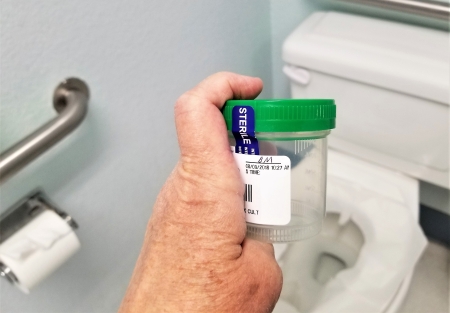
Most federal drug tests fall into one of these categories:
-
Pre-employment or pre-appointment testing
-
Random testing
-
Reasonable suspicion testing
-
Post-accident or incident testing
-
Follow-up testing after treatment or a last chance agreement
A federal drug testing lawyer immediately evaluates:
-
What authority and policy the agency relied on
-
Whether your position is actually designated for random testing
-
Whether the reasonable suspicion documentation exists and is legally adequate
-
Whether the chain of custody and lab procedures are defensible
-
Whether medical explanations were properly considered
-
Whether the agency is trying to rebrand a medical issue as misconduct
Random drug testing for federal employees: what it is and what it is not
Random testing is not supposed to be retaliatory, targeted, or selectively applied. It is usually limited to employees in designated testing positions, and selection should be neutral.
Common red flags we see:
-
You are “randomly” selected right after protected activity, a dispute, or a complaint
-
Supervisors are involved in selection when they should not be
-
Your job is not truly designated as a testing position, but the agency treats it like it is
-
The agency’s testing program is inconsistently applied across similarly situated employees
Even when random testing is lawful, the agency’s response to results still has to be lawful. The test is not the whole case.
Reasonable suspicion drug testing: the most abused category
Reasonable suspicion testing is supposed to be based on specific, contemporaneous observations. Not vibes. Not rumors. Not personal dislike. Not “someone said you looked tired.”
If you are facing reasonable suspicion testing, you should assume the agency is building a record. A federal drug testing lawyer will want to see:
-
Who observed what, specifically
-
When they observed it
-
What training those supervisors have
-
What policy they used
-
Whether there were alternative medical explanations
-
Whether there is comparator evidence showing selective enforcement
Reasonable suspicion cases often overlap with misconduct allegations like conduct unbecoming, lack of candor, or failure to follow instructions when employees are accused of refusing testing or being uncooperative. The defense strategy changes depending on which charge the agency is trying to anchor.
Prescription medications at work: lawful does not mean risk-free in federal service
Federal employees are often blindsided by this scenario:
You take a lawful medication prescribed by a doctor. You do your job. Then an incident happens, someone complains, or you are selected for testing. Suddenly, your medication becomes “the issue.”
A strong federal drug testing lawyer focuses on the right questions:
-
Did the agency have a legitimate reason to ask medical questions, or did it cross into unlawful medical inquiry?
-
Is your position safety-sensitive or regulated in a way that changes the analysis?
-
Is the agency treating an accommodation issue as a misconduct issue?
-
Did the agency engage in an interactive process, or did it jump straight to discipline?
This is where many cases can be flipped. What the agency calls “misconduct” is often a medical-management problem that triggers accommodation duties.
Safety-sensitive positions: the agency gets more tools, but not unlimited power
Safety-sensitive positions raise the stakes because agencies will argue that any risk is unacceptable. That does not mean the agency can ignore due process or medical privacy.
Even in safety-sensitive roles, the agency must still:
-
Use lawful procedures
-
Make individualized determinations
-
Consider reasonable alternatives and accommodations where applicable
-
Support its decision with evidence, not assumptions
This is especially true when agencies attempt to justify adverse action under OPM adverse and performance action guidance and implementing regulations like 5 C.F.R. Part 752.
Marijuana and federal employment: state legalization will not save you, but strategy still matters
Marijuana is a major source of confusion because employees assume legality under state law equals safety at work. Federal employment does not operate that way.
A federal drug testing lawyer will evaluate:
-
Whether the agency can prove what it claims
-
Whether this is treated as off-duty conduct and how nexus will be argued
-
Whether you have a medical marijuana card and whether that triggers a disability discussion
-
Whether the agency’s penalty is consistent with similarly situated cases
The core point: marijuana cases can still be defensible. They require sophisticated framing, mitigation, and often comparator evidence.
What a “positive test” can trigger: discipline, suitability, or security
A positive test can trigger different systems, each with different rules and consequences:
-
Discipline: suspension, demotion, removal, last chance agreements
-
Suitability: especially for applicants and certain categories of employees
-
Security or sensitive position issues: where the agency treats the test as a trustworthiness concern
The most important question is not “Is it positive?” It is “What is the agency trying to do with it?”
A federal drug testing lawyer builds the defense around the pathway, not the headline.
The penalty decision is where cases are won or lost
Even if the agency proves its charge, it still has to justify the penalty. This is where mitigation can save careers.
Penalty mitigation involves:
-
The employee’s record and past discipline
-
The seriousness and context of the alleged conduct
-
Consistency of penalties across employees
-
Whether the agency considered alternatives
-
Whether rehabilitation and future risk were evaluated
If you want the deeper penalty framework, review our Douglas factors guide.
A top federal drug testing lawyer treats mitigation as its own litigation. It is not an apology letter. It is a strategic penalty attack.
The agency’s favorite traps in drug testing and impairment cases
These are the traps we see repeatedly:
-
The forced narrative: “We are removing you for safety.” They use fear to cut off your defenses.
-
The resignation push: “Resign now and it will look better.” Often false. Often harmful.
-
The medical overreach: They ask for diagnoses, full records, and broad disclosures without legal basis.
-
The silence trap: They pressure you to explain everything immediately before you have counsel.
-
The refusal charge: If you refuse testing or appear uncooperative, they pivot to insubordination or failure to follow instructions.
-
The candor snare: Any inconsistency becomes a lack of candor accusation.
A federal drug testing lawyer helps you avoid irreversible mistakes in the first 72 hours.
What you should do immediately if drug testing or impairment is raised
This is general information, not individualized legal advice, but it is a strong starting checklist:
-
Ask for the policy basis for the test and the category being used (random, suspicion, post-incident)
-
Document the timeline in a private file while facts are fresh
-
Do not guess, speculate, or over-explain in writing
-
If medical issues are involved, prepare to provide targeted documentation, not a medical data dump
-
Preserve texts, emails, and witness names, especially if this feels retaliatory or selective
-
Get counsel early so your first substantive response is strategic, not reactive
If you are already facing a notice of proposed action, the stakes are even higher because your reply becomes part of the permanent record.
How NSLF builds winning defenses in these cases
Most firms “respond.” We take command.
When a federal employee hires a federal drug testing lawyer at National Security Law Firm, we focus on three goals:
-
Stop the worst outcome (removal, resignation, clearance damage, adverse suitability label)
-
Maximize your case value (back pay, clean records, neutral references, corrected SF-50 language where possible)
-
Preserve your future (retirement, benefits, reputation, and onward federal opportunities)
Our approach typically includes:
-
Tight legal analysis of the agency’s authority and procedures
-
Evidence strategy and comparator mapping
-
Penalty mitigation under the Douglas factors
-
Settlement leverage and creative resolutions
-
Forum strategy if the case is headed to MSPB, EEO, OSC, or grievance pathways
If your case goes to the MSPB, the rules and timelines matter. MSPB procedures are governed by 5 C.F.R. Part 1201 and the Board’s portal through MSPB e-Appeal.
Why federal employees nationwide choose NSLF as their federal drug testing lawyer team
Federal employees do not hire us because we sound nice. They hire us because we win hard cases, we understand the system from the inside, and we build outcomes like a litigation unit.
You can see what clients say in our Google reviews.
You can also learn what makes us different on our Why National Security Law Firm page.
And if you are still deciding who to trust, read our guide on how to find the best lawyer. The federal system is unforgiving. The wrong lawyer is not just unhelpful. It can be career-ending.
Our Attorney Review Board: the “war room” advantage other firms cannot match
Most firms give you one lawyer’s view. We give you a vetted strategy.
Complex federal employment cases at NSLF are supported by our proprietary Attorney Review Board, where senior attorneys pressure-test the facts, identify vulnerabilities in the agency’s case, and refine the strongest path to victory.
That is how you maximize outcomes. That is how you avoid blind spots. That is how you fight the federal government on equal footing.
FAQs: Drug Testing, Prescription Medications, and Workplace Impairment for Federal Employees
Can my agency drug test me without warning?
Sometimes, yes. Random testing programs are designed to be unannounced. But random testing is not unlimited. It usually applies only to designated testing positions and must be administered neutrally. A federal drug testing lawyer can assess whether your position was properly designated and whether selection procedures were consistent.
What is “reasonable suspicion” drug testing and how is it proven?
Reasonable suspicion testing should be based on specific, contemporaneous observations that reasonably suggest drug use. Not hearsay. Not personality conflicts. Not “they seemed off.” Documentation, timing, and supervisor training often matter. Many agencies fail here, which can create defense leverage.
If I test positive, does that automatically mean removal?
No. A positive test can lead to discipline, but the penalty should be evaluated under legal standards and mitigation principles. Penalty consistency, rehabilitation, medical explanations, and nexus to job duties can matter. The best time to fight is before the agency finalizes its narrative.
Can I be disciplined for lawful prescription medication use?
Yes, but not simply because you have a prescription. The issue is usually framed as impairment, safety risk, failure to follow reporting requirements, or inability to perform duties. Agencies also commonly overreach with medical demands. A federal drug testing lawyer can often reframe the case into a medical-management and accommodation analysis rather than misconduct.
Do I have to tell my supervisor what medications I take?
It depends on your position, agency, and the specific policy. Some safety-sensitive roles have disclosure rules. But agencies cannot demand unlimited medical information without legal justification. You should be careful. Over-disclosure can create problems. Under-disclosure can also create problems. Strategy matters.
What if I refuse a drug test?
Refusal is often charged as misconduct and can trigger severe penalties. Agencies may frame it as failure to follow instructions or insubordination, which are commonly used removal charges. If refusal is related to medical issues, disability, or unlawful testing procedures, counsel is essential before anything is put in writing.
What if I made a mistake in what I said about use or medications?
Be careful. Agencies often convert inconsistencies into lack of candor allegations, which can be devastating. If you are worried you already said something wrong or incomplete, do not try to fix it casually. A federal drug testing lawyer should help control the narrative and protect you from compounding risk.
Can marijuana use off duty still get me fired if it was legal in my state?
Yes, federal employment consequences can still happen. But it is not always automatic. The legal analysis often involves nexus, job sensitivity, timing, policies, and penalty consistency. Defense strategy often hinges on mitigation and controlling the record early.
Will a positive test affect my security clearance?
It can. Agencies may treat drug issues as judgment or reliability concerns, especially in sensitive positions. The worst mistake is assuming the employment case and clearance case are separate. They can cross-contaminate. A strong federal drug testing lawyer coordinates the strategy so one does not sabotage the other.
Can I use EAP or treatment programs without admitting misconduct?
Sometimes. EAP is often a smart move, but timing and framing matter. Using EAP resources can support mitigation, but you do not want to create unnecessary admissions. A strategy-led approach is best.
What if my impairment allegation is really about a medical condition or disability?
This is common. Fatigue, anxiety, medication side effects, or health episodes get mislabeled as impairment. The agency may push for a fitness-for-duty exam. That can be lawful in some circumstances, but it can also be misused. A federal drug testing lawyer will assess medical privacy limits, accommodation duties, and whether the agency is using the process as a removal machine.
Do these cases go to MSPB?
Sometimes. Many adverse actions are appealable to the Merit Systems Protection Board, depending on your status and the penalty. The procedural rules are strict and are governed by MSPB procedures in 5 C.F.R. Part 1201. Forum choice also matters if you have union grievance rights or EEO/OSC issues.
Should I resign if my supervisor hints that I should?
Usually, do not resign without counsel. Agencies push resignation because it can end your rights and reduce their risk. Sometimes resignation is strategically useful, but only when negotiated and controlled. A federal drug testing lawyer evaluates whether resignation would harm your record, benefits, and future employability, and whether a better settlement outcome exists.
What is a Last Chance Agreement and is it a good idea?
Last chance agreements can save careers, but they can also be traps. They often include strict conditions, waiver language, and accelerated removal provisions. You should treat them like litigation documents. A federal drug testing lawyer should negotiate terms, narrow admissions, and protect your long-term interests.
Transparent, Flat Fee Pricing
National Security Law Firm offers transparent flat-fee pricing for many federal employment matters, including drug testing defense, impairment allegations, and proposed discipline responses. Flat fees are designed to eliminate hourly surprises and to align our incentives with your outcome.
We also offer legal financing through Pay Later by Affirm, which can allow eligible clients to spread payments over time.
Why Choose NSLF?
When the federal government is your opponent, you need more than a general employment lawyer. You need leading federal employment lawyers, insider-led and built for federal agency warfare.
At NSLF, our team includes former federal agency counsel and government insiders who know exactly how these cases are built and how deciding officials think. We use that insider advantage to maximize your case value and outcome, whether that means avoiding removal, preserving your record, protecting your benefits, or negotiating a clean exit on your terms.
Learn what sets us apart on Why National Security Law Firm, and see our reputation in our Google reviews.
Our Leadership Advantage
Federal employees across the country trust National Security Law Firm because we lead the field. We combine insider experience, battle-tested litigation strategy, and national reach from Washington, D.C., the epicenter of federal employment decision-making.
We are built differently:
-
Former federal insiders who know the system inside out
-
Veteran-founded, mission-driven representation
-
Nationwide practice with D.C. power and perspective
-
A collaborative war-room approach through our Attorney Review Board
-
Transparent flat fees and financing options
-
A client reputation proven in our Google reviews
When your career is under attack, you do not need a local generalist. You need the command center.
Employment Defense Resource Hub
This guide is part of our Federal Employment Law Hub, a packed library of the most strategic federal employment content online. Inside the hub, you will find complete guides, insider tactics, cost and forum strategy, and step-by-step playbooks designed to help federal employees maximize outcomes and protect their futures.
If you are still choosing counsel, read Finding the Best Federal Employment Lawyer, Why Local Isn’t Always Better.
Book a Free Consultation
If you are facing a drug test, a prescription medication issue, or an impairment allegation, do not wait until the agency issues a proposed removal. The earlier a federal drug testing lawyer gets involved, the more leverage you have and the more outcomes remain on the table.
Book a free, confidential consultation here: Book your free consultation.
National Security Law Firm: It’s Our Turn to Fight for You.