
Most people approach airport cash seizure cases completely backward.
They assume the case will primarily be won through:
- emotional explanations
- courtroom arguments
- proving they are “innocent”
- arguing with CBP officers
- insisting the money was legal
In reality, many successful CBP currency seizure cases are won very differently.
In many situations, the strongest airport cash seizure cases are built through:
- documentation
- credibility
- mitigation
- procedural positioning
- strategic administrative leverage
- disciplined narrative control
long before courtroom litigation ever begins.
That distinction matters enormously.
Federal agencies often evaluate airport cash seizure matters through a broader institutional framework involving:
- banking activity
- source-of-funds evidence
- travel patterns
- procedural behavior
- consistency across explanations
- administrative credibility
That is also why National Security Law Firm repeatedly emphasizes:
the record controls the case.
Additional discussion appears in CBP Money Seizure Lawyers: How to Get Seized Cash Back From Customs, How Customs Seizure Cases Are Really Won, and the broader Customs Seizure Lawyer Hub.
Most People Lose Currency Seizure Cases Before They Understand What the Government Is Actually Evaluating
One of the biggest mistakes people make is assuming CBP is evaluating only:
- whether the cash was legal
or - whether criminal charges can be proven.
In reality, federal agencies frequently evaluate a much broader institutional picture involving:
- source-of-funds documentation
- banking activity
- credibility
- travel patterns
- procedural behavior
- mitigation
- consistency across explanations
That broader review often begins immediately:
- during airport questioning
- during customs declarations
- during initial interviews
- during document review
- during early procedural submissions
Federal agencies frequently begin from a position of:
- institutional suspicion
- heightened scrutiny
- credibility evaluation
- financial pattern analysis
especially where:
- large amounts of cash are involved
- banking patterns appear unusual
- reporting issues exist
- explanations evolve over time
- documentation appears weak or incomplete
That means many airport currency seizure cases become heavily:
- credibility-driven
- documentation-driven
- mitigation-driven
long before courtroom litigation ever begins.
Additional discussion appears in Why Most People Lose CBP Seizure Cases Before They Even Begin and Why CBP Thinks Carrying Large Amounts of Cash Is Suspicious.
Strategy #1: Win the Documentation Battle Early
One of the most important realities in airport cash seizure matters is that:
strong documentation frequently shapes leverage.
Weak documentation frequently expands suspicion.
Federal agencies often evaluate:
- bank statements
- tax returns
- source-of-funds records
- withdrawal history
- deposit patterns
- contracts
- invoices
- business records
- wire activity
- financial timelines
collectively.
Strong currency seizure cases often involve:
- organized records
- traceable financial activity
- consistent timelines
- supporting documentation that aligns with the narrative
Weak documentation frequently creates:
- credibility concerns
- mitigation problems
- expanded scrutiny
- procedural complications
- litigation exposure
One of the biggest mistakes people make is waiting too long to:
- organize records
- analyze banking activity
- identify inconsistencies
- develop mitigation strategy
Sophisticated customs seizure strategy often begins by:
- reconstructing the financial story carefully
- organizing supporting records strategically
- evaluating potential weaknesses early
- identifying areas likely to trigger agency skepticism
That administrative groundwork frequently shapes:
- settlement posture
- mitigation opportunities
- procedural leverage
- overall recovery strategy
Additional discussion appears in CBP Seized My Cash for “Structuring”: What Does That Mean? and What CBP Looks for in a Petition for Remission.
Strategy #2: Protect Credibility at All Costs
Many airport cash seizure matters are ultimately:
- credibility cases.
Federal agencies frequently compare:
- airport questioning
- customs declarations
- banking records
- mitigation submissions
- procedural filings
- later explanations
across the entire administrative record.
That means:
small inconsistencies often become much larger problems later.
Many individuals unintentionally weaken their cases by:
- overexplaining
- speculating
- guessing about timelines
- changing explanations later
- reacting emotionally during questioning
- making unsupported statements
Federal agencies frequently evaluate:
not simply:
“Could this explanation be true?”
but:
“Does the overall administrative record remain consistent over time?”
That distinction matters enormously.
Strong currency seizure strategy frequently involves:
- disciplined communication
- careful narrative control
- consistency across submissions
- avoiding unsupported assumptions
- strategically managing credibility early
Weak credibility frequently narrows:
- mitigation flexibility
- settlement leverage
- procedural options
- recovery opportunities
That is one reason why sophisticated airport seizure strategy often focuses heavily on:
preserving institutional credibility from the very beginning.
Additional discussion appears in Why Early Statements to CBP Can Destroy Your Case, How Credibility Affects Customs Seizure Cases, and Why Consistency Matters in Federal Seizure Cases.
Strategy #3: Understand That Mitigation Often Matters More Than People Expect
One of the most misunderstood realities in airport currency seizure matters is how heavily many cases are shaped through:
- mitigation
- administrative positioning
- procedural behavior
- credibility
- institutional reliability
Many people incorrectly assume:
“If the money is legal, mitigation should not matter.”
Federal agencies often evaluate these cases differently.
In many situations, agencies evaluate:
- whether explanations appear genuine
- whether procedural cooperation exists
- whether documentation supports the narrative
- whether corrective measures were taken
- whether the claimant appears administratively reliable
That broader institutional analysis frequently shapes:
- settlement posture
- mitigation flexibility
- procedural leverage
- recovery opportunities
Strong mitigation often involves:
- organized documentation
- disciplined communication
- credible explanations
- thoughtful procedural positioning
- strategic narrative control
Many successful airport cash seizure matters are effectively:
- mitigation cases
- credibility cases
- administrative leverage cases
rather than courtroom litigation matters alone.
Additional discussion appears in What Is a Petition for Remission or Mitigation? and Administrative Petition vs Federal Court Litigation.
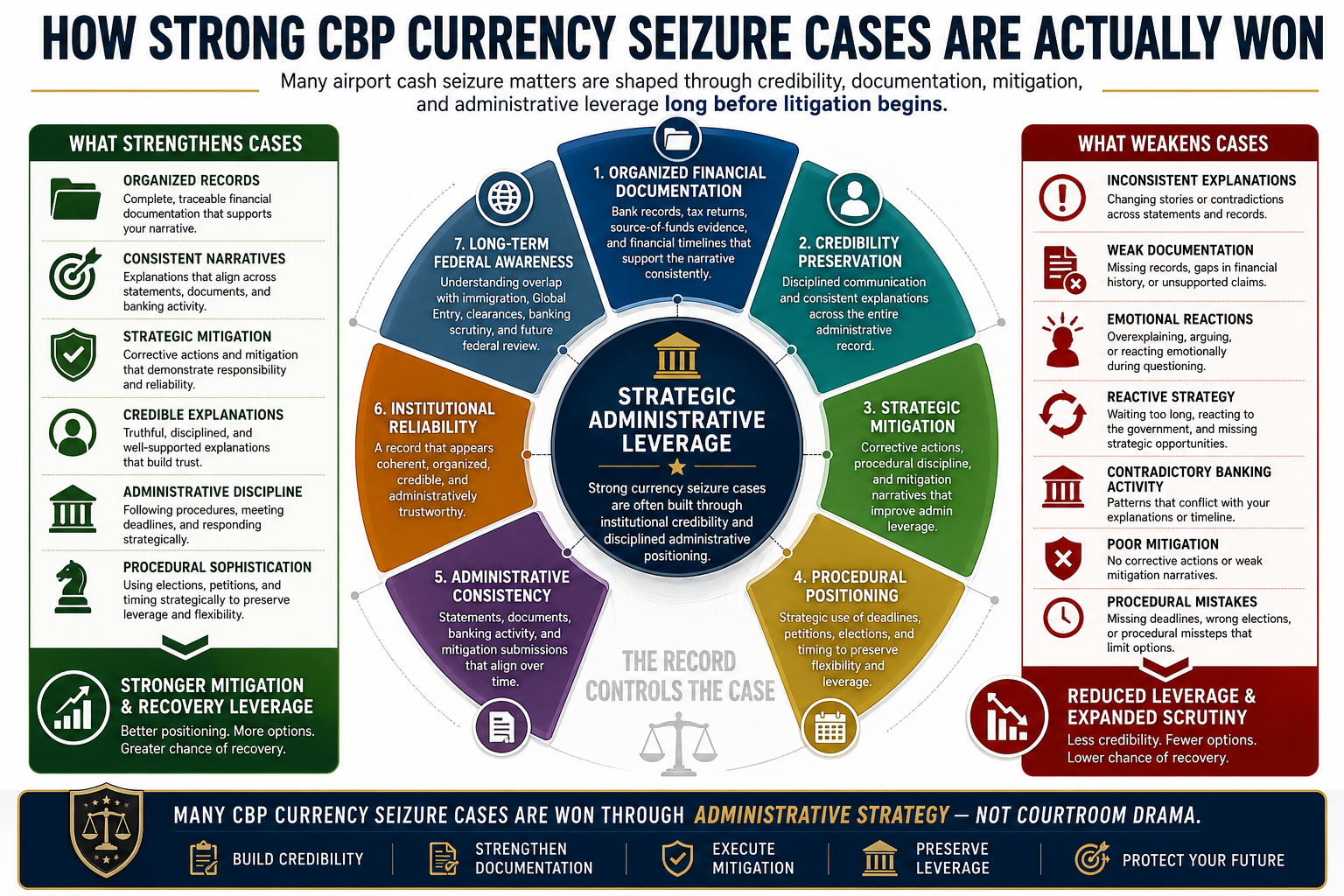
Strategy #4: Control the Administrative Record Before It Controls You
One of the biggest hidden realities in airport cash seizure matters is that:
the administrative record begins immediately.
It often begins:
- during airport questioning
- during customs declarations
- during initial explanations
- during banking review
- during the first procedural submission
Many people mistakenly assume:
“We’ll explain everything later.”
In reality, federal agencies frequently compare:
- airport statements
- financial records
- mitigation submissions
- procedural filings
- later explanations
across the entire life of the case.
That means:
weak early positioning may later become extremely difficult to reverse.
Sophisticated customs seizure strategy often focuses heavily on:
- controlling the narrative early
- identifying inconsistencies before the government does
- organizing documentation strategically
- strengthening credibility immediately
- preserving leverage before scrutiny expands
Strong cases often reflect:
- administrative discipline
- consistency across records
- credible mitigation
- organized financial narratives
- procedural sophistication
Weak cases are frequently reactive.
That is one reason why sophisticated customs seizure representation often focuses heavily on:
- shaping the administrative record
rather than simply reacting after problems develop.
Additional discussion appears in The Record Controls the Case: Why Your First Submission Matters and How CBP Actually Decides Seizure Cases.
Strategy #5: Think Beyond the Seizure Itself
Many airport cash seizure matters involve substantially more than:
- recovering seized money
- contesting forfeiture
- resolving the immediate seizure
Depending on the allegations involved, the administrative record created during the case may later affect:
- immigration proceedings
- Global Entry eligibility
- security clearances
- federal employment
- contractor eligibility
- banking scrutiny
- future border screening
- broader federal investigations
Federal agencies often evaluate these systems collectively rather than in isolation.
That broader overlap is one reason why sophisticated customs seizure strategy frequently requires understanding:
- federal administrative systems
- institutional credibility analysis
- long-term federal implications
- overlap across multiple federal systems
The strongest customs seizure strategies often evaluate:
not only:
“How do we recover the money?”
but also:
“How do we protect the client’s broader federal position long-term?”
That broader institutional perspective frequently creates substantially better strategic outcomes than narrowly reactive forfeiture litigation alone.
Additional discussion appears in Federal Agencies Share Information and Can Social Media or Prior Statements Hurt Your CBP Case?.
Strategy #6: Understand When Litigation Helps — and When It Doesn’t
Many people assume:
“going to court”
automatically creates the strongest strategy.
In reality, sophisticated customs seizure strategy often involves carefully evaluating:
- administrative leverage
- procedural posture
- mitigation opportunities
- documentation strength
- litigation exposure
- long-term federal implications
before making procedural elections.
In some situations:
strong administrative positioning may create:
- settlement opportunities
- mitigation flexibility
- procedural leverage
without immediate litigation.
In other situations:
judicial action may become strategically important.
The strongest customs seizure lawyers usually evaluate:
- both tracks carefully
rather than automatically defaulting to: - aggressive litigation
or - passive administrative submissions.
That strategic balance often matters enormously.
Sophisticated representation frequently focuses on:
- preserving leverage
- strengthening credibility
- narrowing disputes
- controlling procedural timing
before litigation risk expands unnecessarily.
Additional discussion appears in Election of Proceedings Form Explained and Petition vs Judicial Action: Which Option Is Better?.
What Strong CBP Currency Seizure Cases Usually Have in Common
Strong airport cash seizure cases frequently share several characteristics:
- organized financial documentation
- disciplined communication
- consistent explanations
- strategic mitigation
- procedural sophistication
- careful administrative positioning
Strong cases are often built deliberately.
Weak cases are frequently reactive.
Many successful currency seizure matters involve:
- credible source-of-funds evidence
- organized banking records
- mitigation that appears genuine
- explanations that remain consistent over time
- strategic procedural positioning early in the process
Federal agencies frequently evaluate:
- administrative reliability
- procedural behavior
- documentation quality
- consistency across the record
collectively.
That means strong customs seizure strategy often focuses heavily on:
- institutional credibility
- leverage preservation
- administrative sophistication
rather than emotional confrontation alone.
Additional discussion appears in The Biggest Mistakes People Make After CBP Seizes Their Money and How To Choose the Best Customs Seizure Lawyer.
Why National Security Law Firm Is Different
Many law firms approach airport cash seizure matters primarily as:
- isolated forfeiture disputes
- criminal accusations
- reactive litigation matters
National Security Law Firm approaches these matters differently.
The firm represents clients nationwide in:
- airport cash seizure matters
- administrative forfeiture proceedings
- structuring-related seizures
- export-control matters
- federal administrative proceedings
- overlapping federal investigations
National Security Law Firm focuses heavily on:
- strategic administrative positioning
- source-of-funds analysis
- mitigation strategy
- credibility management
- procedural leverage
- long-term federal implications
rather than simply reacting procedurally after the seizure occurs.
That broader federal-systems perspective becomes especially important because airport cash seizure matters often intersect with:
- immigration
- Global Entry
- federal employment
- contractor eligibility
- security clearances
- future border scrutiny
- banking scrutiny
- broader federal investigations
The firm’s broader experience with:
- security clearances
- export controls
- federal employment
- contractor-related matters
- national security systems
helps inform how airport cash seizure matters are strategically evaluated from the outset.
That is why National Security Law Firm repeatedly emphasizes:
the record controls the case.
For broader discussion of airport cash seizure strategy generally, visit the firm’s CBP Money Seizure Lawyers: How to Get Seized Cash Back From Customs and Customs Seizure Lawyer Hub pages.
Frequently Asked Questions
How do you actually win a CBP currency seizure case?
Many successful airport cash seizure matters are heavily shaped through:
- organized documentation
- strategic mitigation
- credibility preservation
- procedural positioning
- disciplined communication
- strong source-of-funds evidence
Many cases are effectively shaped during the administrative phase long before courtroom litigation ever begins.
What evidence helps most in airport cash seizure cases?
Commonly important evidence includes:
- bank statements
- tax returns
- withdrawal records
- deposit history
- contracts
- invoices
- business records
- source-of-funds documentation
- travel documentation
Federal agencies frequently evaluate whether the overall financial story appears:
- coherent
- consistent
- administratively credible
Why does credibility matter so much?
Federal agencies frequently compare:
- airport questioning
- customs declarations
- banking records
- mitigation submissions
- later explanations
Even relatively small inconsistencies may later create:
- administrative skepticism
- mitigation problems
- procedural complications
- reduced leverage
Does mitigation really matter?
Absolutely.
Many airport cash seizure matters become heavily:
- mitigation-driven
- credibility-driven
- procedure-driven
Federal agencies frequently evaluate:
- procedural behavior
- corrective actions
- mitigation credibility
- administrative reliability
when determining leverage and recovery opportunities.
Can legal money still be seized?
Yes.
CBP may seize and pursue forfeiture of cash even where:
- the money was lawfully earned
- no criminal charges are filed
- the traveler disputes wrongdoing
Why do early statements matter so much?
Federal agencies frequently evaluate:
- airport explanations
- financial timelines
- customs declarations
- later mitigation submissions
collectively.
Weak early explanations may later create:
- credibility concerns
- mitigation problems
- procedural complications
That is one reason why disciplined communication often matters enormously early in the process.
Does litigation automatically improve the case?
Not necessarily.
Sophisticated customs seizure strategy frequently involves evaluating:
- administrative leverage
- mitigation opportunities
- procedural posture
- litigation exposure
- documentation strength
before deciding whether litigation strategically helps.
Can weak documentation hurt the case even if the money is legal?
Absolutely.
Weak or inconsistent records frequently create:
- administrative skepticism
- credibility concerns
- mitigation problems
- expanded scrutiny
That is one reason why organized source-of-funds documentation often becomes critically important.
What do strong currency seizure cases usually look like?
Strong cases often involve:
- organized banking records
- disciplined communication
- consistent explanations
- strategic mitigation
- procedural sophistication
- credible source-of-funds evidence
Why do strong customs seizure lawyers focus so heavily on administrative strategy?
Because many airport cash seizure matters are effectively shaped long before courtroom litigation ever begins.
Federal agencies frequently evaluate:
- credibility
- documentation quality
- procedural behavior
- consistency across explanations
- mitigation
across the entire administrative record.
Speak With a Nationwide Airport Cash Seizure Lawyer
If CBP seized your cash at the airport or border, the strategic decisions made early in the process may significantly affect:
- mitigation opportunities
- procedural leverage
- credibility assessments
- litigation exposure
- broader federal consequences
Many airport cash seizure matters are heavily influenced by:
- source-of-funds documentation
- consistency of explanations
- procedural timing
- mitigation strategy
- administrative positioning
That is why National Security Law Firm repeatedly emphasizes:
the record controls the case.
National Security Law Firm offers nationwide representation and free consultations for airport cash seizure matters.
The fastest and easiest way to get started is through the firm’s online booking system.
In many situations, same-day consultations are available, and the process typically takes less than a minute to schedule online.
Once booked, an attorney will personally call you at the scheduled time to discuss:
- the seizure
- procedural deadlines
- source-of-funds documentation
- mitigation strategy
- credibility concerns
- broader federal implications
To schedule a consultation online, visit:
Book a Free Consultation Online
You may also contact the firm directly at:
Phone: (202) 600-4996
Additional related resources:
- CBP Seized My Cash for “Structuring”: What Does That Mean?
- Traveling With More Than $10,000: What You Need to Know Before Crossing the Border
- Why CBP Thinks Carrying Large Amounts of Cash Is Suspicious
- Why Early Statements to CBP Can Destroy Your Case
- CBP Money Seizure Lawyers: How to Get Seized Cash Back From Customs
- Customs Seizure Lawyer Hub