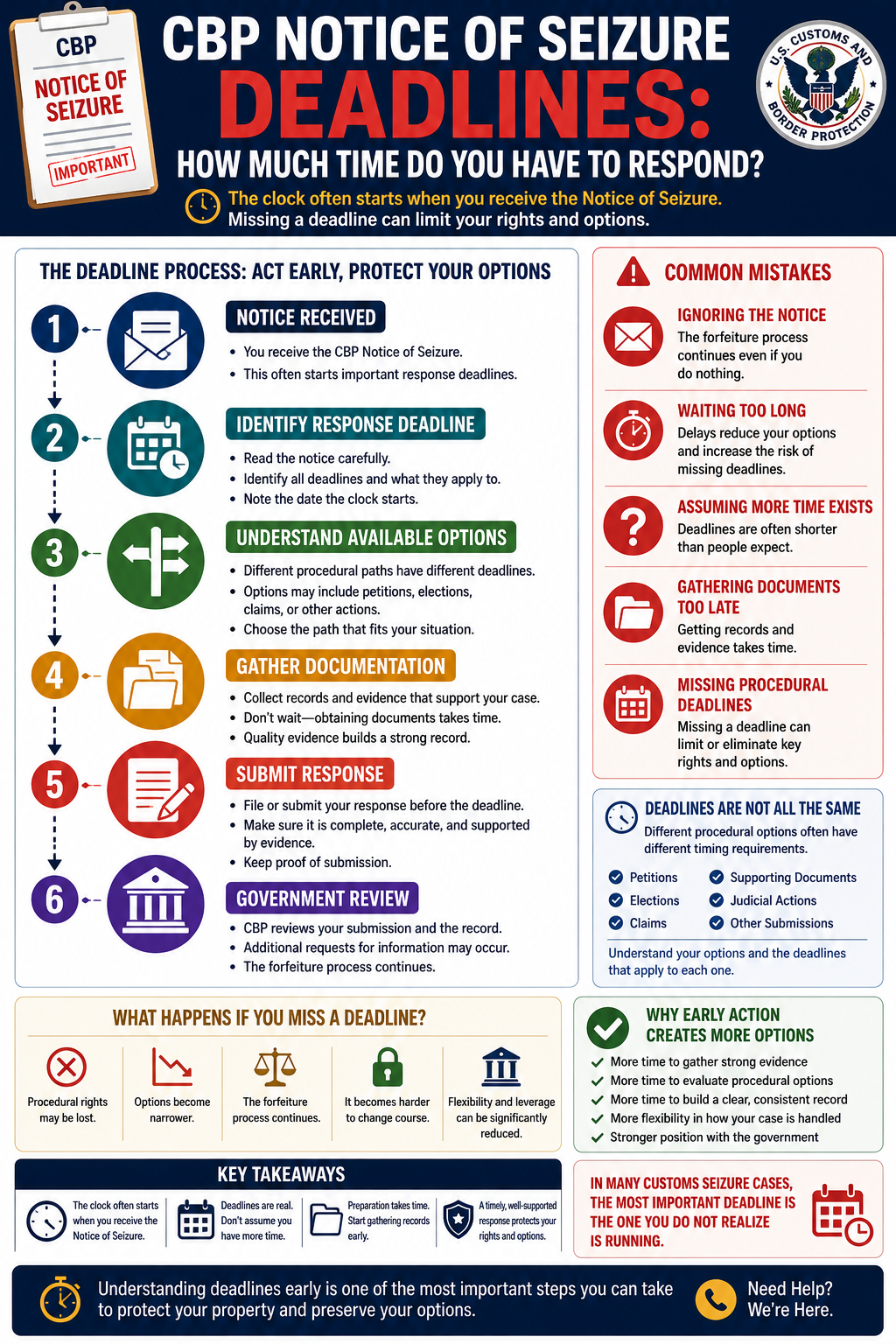
One of the biggest mistakes people make after receiving a CBP Notice of Seizure is focusing exclusively on the property that was seized.
That reaction is understandable.
People naturally want to know:
- Can I get the property back?
- Why was it seized?
- What happens next?
Those are important questions.
However, from a procedural standpoint, another issue is often even more important:
How much time do I have to respond?
In many customs seizure cases, the most significant damage occurs not because of the seizure itself, but because important deadlines are overlooked.
Federal forfeiture procedures continue moving forward regardless of whether the recipient feels ready to respond.
As a result, understanding how Notice of Seizure deadlines work is often one of the most important things a person can do after receiving the letter.
This page focuses specifically on timing.
For a broader discussion of what the notice means generally, see:
- I Received a CBP Notice of Seizure: What Does It Mean?
- What Happens After You Receive a CBP Notice of Seizure?
Why Deadlines Matter in Customs Seizure Cases
Many people view deadlines as administrative details.
Federal agencies often do not.
Deadlines frequently determine:
- what options remain available,
- what procedural rights can be exercised,
- how the case may proceed,
- and what flexibility exists moving forward.
This is one reason customs seizure matters often become procedural long before they become substantive.
Many recipients assume:
The most important issue is whether the property should have been seized.
That issue certainly matters.
But before anyone reaches that question, there are often procedural requirements that must be addressed first.
The forfeiture process generally continues moving forward according to established timelines.
As a result, timing often becomes one of the most important strategic issues in the case.
The Notice of Seizure Usually Starts the Clock
Many recipients view the Notice of Seizure as a summary of what already happened.
In reality, it often serves another function.
The notice frequently marks the beginning of a new procedural timeline.
The property has already been seized.
The government is now informing the recipient that the forfeiture process is moving forward.
As a result, the notice often becomes the event that triggers:
- response deadlines,
- procedural decisions,
- filing requirements,
- and other timing-related obligations.
This is one reason the date the notice arrives is frequently important.
Many people mistakenly assume that the timing issues relate to the original seizure.
In practice, the notice itself often begins a separate phase of the case.
That phase may involve decisions regarding:
- elections,
- petitions,
- claims,
- supporting documentation,
- and other procedural actions.
The important takeaway is that the notice is not simply informational.
It often marks the beginning of a period during which significant procedural decisions must be made.
What Deadlines Are Commonly Found in a CBP Notice of Seizure?
Different notices may contain different timing requirements.
As a result, it is important to read the specific notice carefully rather than relying on assumptions.
Common timing issues often relate to:
- responding to the notice,
- procedural elections,
- petitions,
- claims,
- supporting documentation,
- and other forfeiture-related actions.
Many recipients are surprised to discover that different procedural paths may involve different timing considerations.
This is one reason it is often helpful to understand not only:
What is the deadline?
but also:
What is the deadline for?
Different procedural options may create different obligations and different strategic considerations.
The government’s notice often identifies these timing requirements.
Understanding what they relate to is frequently just as important as understanding when they occur.