
Many people assume a petition for remission is simply an opportunity to:
- explain what happened
- tell CBP the money or property was legal
- ask for the return of seized property
In reality, CBP often evaluates petitions much more strategically and institutionally than people initially realize.
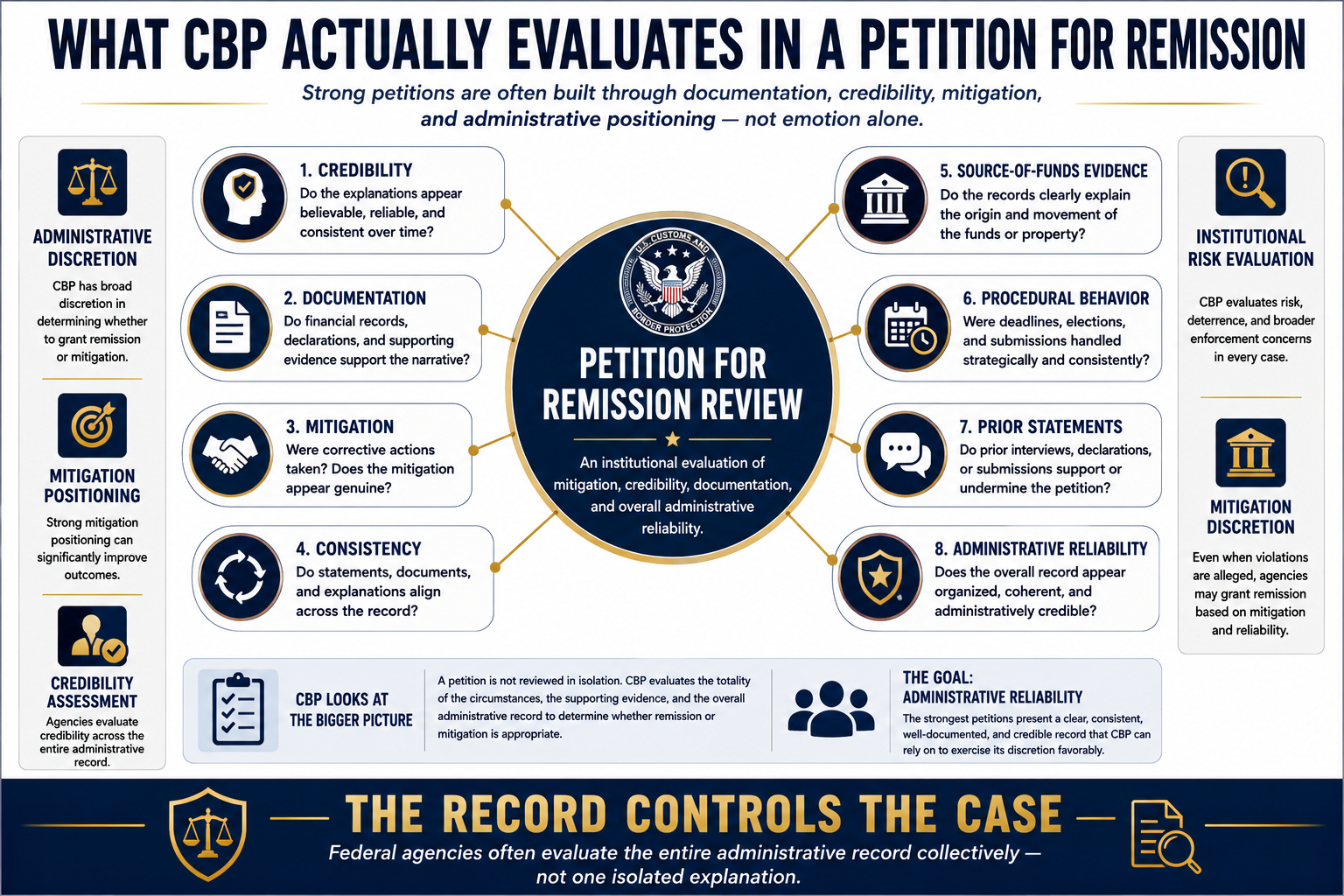
In many customs seizure matters, federal agencies frequently assess:
- credibility
- consistency
- documentation quality
- mitigation evidence
- procedural behavior
- administrative reliability
That is one reason why many petitions succeed or fail based less on emotional explanations and more on whether the overall administrative record appears:
- coherent
- plausible
- properly documented
- strategically credible
Most People Misunderstand What a Petition for Remission Actually Is
A petition for remission is not simply a “request letter.”
It is often one of the most important strategic submissions in the entire administrative forfeiture process.
In many situations, the petition becomes the primary document through which CBP evaluates:
- mitigation
- credibility
- procedural cooperation
- documentation strength
- overall administrative posture
That is one reason why petitions frequently shape:
- settlement opportunities
- mitigation outcomes
- procedural leverage
- litigation posture later if litigation eventually becomes necessary
Many people mistakenly approach the petition emotionally.
Federal agencies often approach it institutionally.
That distinction matters enormously.
Additional discussion appears in What Is a Petition for Remission or Mitigation? and CBP Notice of Seizure Letter Explained: What To Do Next.
Credibility Is Often One of the Most Important Factors
One of the most misunderstood aspects of customs forfeiture strategy is how heavily CBP often evaluates credibility.
In many situations, the government evaluates not simply whether the explanation sounds theoretically possible, but whether the overall record appears:
- reliable
- internally consistent
- properly documented
- administratively credible
Federal agencies frequently compare:
- inspection statements
- customs declarations
- financial records
- mitigation submissions
- procedural behavior
- later explanations
Even relatively small inconsistencies may become important if investigators believe:
- explanations changed over time
- supporting records conflict with earlier statements
- details were added later to repair weaknesses in the narrative
That broader credibility analysis often shapes:
- mitigation opportunities
- settlement posture
- administrative leverage
- procedural flexibility
Additional discussion appears in How Credibility Affects Customs Seizure Cases and Why Consistency Matters in Federal Seizure Cases.
Documentation Often Determines Whether the Petition Looks Strong or Weak
Many customs seizure petitions ultimately become documentation cases.
Depending on the allegations involved, agencies may evaluate:
- bank statements
- tax returns
- invoices
- ownership records
- source-of-funds evidence
- shipping records
- import/export documents
- contracts
- business records
Strong documentation often:
- improves credibility
- supports mitigation
- reduces government skepticism
- strengthens procedural positioning
Weak or inconsistent records frequently create:
- administrative skepticism
- credibility concerns
- mitigation problems
- procedural complications
That is especially true where:
- declarations conflict with documentation
- timelines appear inconsistent
- explanations evolve later
- records appear incomplete
Federal agencies frequently evaluate consistency across the entire administrative record rather than reviewing each document in isolation.
Additional discussion appears in How To Win a CBP Currency Seizure Case and Why Most People Lose CBP Seizure Cases Before They Even Begin.
Mitigation Often Matters More Than People Realize
Many individuals mistakenly assume petitions are purely about proving innocence.
In reality, many remission decisions involve substantial evaluation of:
- mitigation
- procedural cooperation
- corrective action
- good-faith behavior
- administrative credibility
Federal agencies frequently evaluate:
- whether the claimant appears cooperative
- whether the issue appears isolated
- whether corrective measures were taken
- whether the explanation appears genuine
- whether broader enforcement concerns remain unresolved
In some situations, strong mitigation positioning may substantially improve:
- settlement opportunities
- mitigation outcomes
- administrative negotiations
- overall recovery strategy
That is one reason why many successful petitions are built around:
- disciplined communication
- organized documentation
- credible mitigation
- careful administrative positioning
rather than emotional explanations alone.
Additional discussion appears in Administrative Petition vs Federal Court Litigation.
Procedural Behavior and Timing Also Matter
Many customs seizure matters are heavily:
- deadline-driven
- procedure-driven
- timing-sensitive
Federal agencies often evaluate:
- whether deadlines were met
- whether procedural elections were strategic
- whether submissions appear organized
- whether the claimant behaved consistently throughout the process
Weak procedural positioning may later create:
- reduced leverage
- credibility concerns
- mitigation problems
- additional scrutiny
That is one reason why:
- rushed petitions
- incomplete submissions
- emotional filings
- reactive strategy
often create long-term administrative problems.
Strong administrative discipline frequently matters much more than people initially realize.
Additional discussion appears in Election of Proceedings Form Explained and Why Hiring a Customs Seizure Lawyer Early Matters.
Federal Agencies Often Evaluate the Entire Administrative Record Collectively
One of the most important realities in customs forfeiture matters is that CBP rarely evaluates a petition in isolation.
Instead, agencies frequently assess:
- prior statements
- financial records
- electronic communications
- travel patterns
- procedural behavior
- mitigation submissions
- supporting documentation
collectively.
Federal agencies often ask not simply:
“Could this explanation be true?”
But:
“Does the overall administrative record support it?”
That broader institutional evaluation frequently becomes one of the most important aspects of the case.
That is why National Security Law Firm repeatedly emphasizes:
the record controls the case.
Additional discussion appears in Can Social Media or Prior Statements Hurt Your CBP Case? and The Record Controls the Case: Why Your First Submission Matters.
What Strong Petitions Usually Have in Common
Many successful customs seizure petitions share several characteristics:
- organized documentation
- disciplined communication
- strategic timing
- credible mitigation
- consistent explanations
- careful procedural positioning
Strong petitions are often built deliberately.
Weak petitions are frequently reactive.
In many situations, the strongest administrative strategy involves:
- understanding the government’s likely concerns
- organizing supporting records carefully
- avoiding contradictions
- strengthening credibility
- presenting mitigation strategically
That is one reason why many customs seizure matters are ultimately shaped less by emotional arguments and more by administrative sophistication developed early in the process.
Additional discussion appears in How Customs Seizure Cases Are Really Won and Why Most People Lose CBP Seizure Cases Before They Even Begin.
Why National Security Law Firm Is Different
Many law firms approach customs seizure matters primarily as procedural forfeiture disputes.
National Security Law Firm approaches these matters differently.
The firm represents clients nationwide in:
- customs seizure matters
- administrative forfeiture proceedings
- export-control issues
- contractor-related matters
- federal administrative proceedings
- overlapping federal investigations
National Security Law Firm focuses heavily on:
- administrative positioning
- mitigation analysis
- credibility management
- documentation review
- procedural leverage
- long-term federal implications
rather than simply reacting procedurally after the seizure occurs.
That broader federal-systems perspective becomes especially important because customs seizure matters often intersect with:
- immigration
- export licensing
- federal employment
- contractor eligibility
- security clearances
- future border scrutiny
- broader investigations
That is why National Security Law Firm repeatedly emphasizes:
the record controls the case.
For broader discussion of customs forfeiture strategy generally, visit the firm’s Customs Seizure Lawyers Resource Hub page.
Frequently Asked Questions
What is a petition for remission?
A petition for remission is a formal administrative request asking the government to:
- return seized property
- mitigate forfeiture
- reduce penalties
based on supporting facts and documentation.
What does CBP actually look for in a petition?
Federal agencies often evaluate:
- credibility
- consistency
- documentation quality
- mitigation evidence
- procedural behavior
- administrative reliability
Does credibility matter in remission cases?
Absolutely.
Federal agencies frequently compare:
- inspection statements
- financial records
- mitigation submissions
- later explanations
That broader credibility evaluation often shapes outcomes.
What documents help most?
That depends on the allegations involved, but commonly important records include:
- bank statements
- tax returns
- source-of-funds records
- invoices
- ownership documents
- shipping records
- contracts
Can weak documentation hurt my petition?
Yes.
Weak or inconsistent records often create:
- credibility concerns
- mitigation problems
- administrative skepticism
- reduced leverage
Does mitigation really matter?
In many situations, yes.
Federal agencies frequently evaluate:
- good-faith behavior
- corrective actions
- procedural cooperation
- administrative credibility
- mitigation efforts
Can inconsistent statements hurt remission?
Absolutely.
Federal agencies frequently compare:
- inspection interviews
- declarations
- mitigation submissions
- later explanations
Even relatively small contradictions may create broader credibility concerns.
Does CBP compare records over time?
Yes.
Federal agencies often evaluate consistency across:
- statements
- documents
- procedural behavior
- mitigation submissions
- later explanations
Should a lawyer prepare my petition?
Many customs seizure matters are heavily influenced by:
- administrative positioning
- mitigation strategy
- documentation quality
- procedural timing
- credibility management
That is one reason why strategic analysis often matters much more than people initially realize.
Speak With a Nationwide Customs Seizure Lawyer
If CBP seized your money, merchandise, shipment, vehicle, package, or other property, the quality of the administrative petition may significantly affect:
- mitigation opportunities
- procedural leverage
- credibility assessments
- broader federal consequences
Many customs seizure matters are heavily influenced by:
- documentation quality
- consistency of explanations
- mitigation strategy
- procedural timing
- administrative positioning
That is why National Security Law Firm repeatedly emphasizes:
the record controls the case.
National Security Law Firm offers nationwide representation and free consultations for customs seizure matters.
The fastest and easiest way to get started is through the firm’s online booking system.
In many situations, same-day consultations are available, and the process typically takes less than a minute to schedule online.
Once booked, an attorney will personally call you at the scheduled time to discuss:
- the seizure
- procedural deadlines
- mitigation strategy
- documentation issues
- broader federal implications
To schedule a consultation online, visit:
Book a Free Consultation Online
You may also contact the firm directly at:
Phone: (202) 600-4996
Additional related resources:
- How Customs Seizure Cases Are Really Won
- Customs Seizure Lawyers Resource Hub
- The Record Controls the Case: Why Your First Submission Matters
- Why Hiring a Customs Seizure Lawyer Early Matters
- Administrative Petition vs Federal Court Litigation
- How CBP Actually Decides Seizure Cases
- How Credibility Affects Customs Seizure Cases
- Why Consistency Matters in Federal Seizure Case
- Can Social Media or Prior Statements Hurt Your CBP Case?